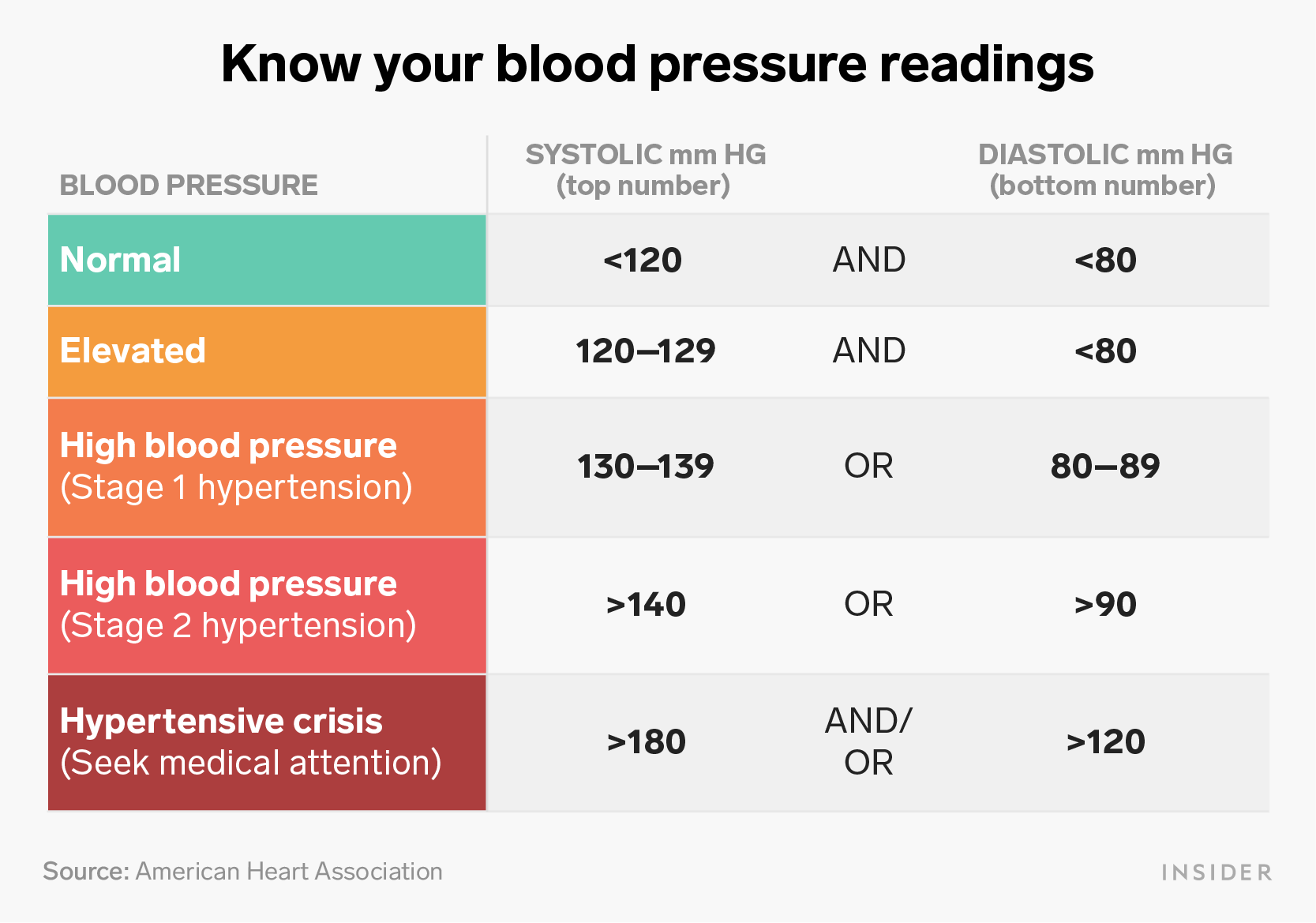
Normal Range For Hypertension. Normal resting heart rates are as follows: There are 4 stages of hypertensions;
How To Understand Your Blood Pressure Readings from www.insider.com
Target to 130 or lower if tolerated: The first (systolic) number represents the pressure in blood vessels when the heart contracts or beats. Hypertension is diagnosed if, when it is.
The Goal Of Treatment Is To Keep Blood Pressures In As Close To Normal Range As Possible, I.e., Bp Less Than Or Equal To 130/80Mmhg Esc/ Esh Recommends The Following:
Measure your blood pressure a few times a week and see your doctor if you notice any significant changes. For men who are 60 years or older, the normal or average blood pressure is 133/69 mmhg. Children (6 to 15 years):
The New Guidelines Note That Blood Pressure Should Be Measured On A Regular Basis And Encourage People To Use Home Blood Pressure Monitors.
Starting pharmacological therapy for grade 2 or 3 hypertension regardless of the level of risk Although intensive bp lowering to achieve target bp below 130/80 mmhg is beneficial in reducing cv outcomes, one should do so cautiously as to avoid adverse events. Target to 130 or lower if tolerated:
Pulmonary Blood Pressure Is Normally A Lot Lower Than Systemic Blood Pressure.
If your readings sit above 120/80mmhg you could be at risk of high blood pressure. These numbers represent the range of stage one hypertension. The normal systolic pressure is usually between 110 and 130mmhg.
High Blood Pressure, Also Called Hypertension, Is Blood Pressure That Is Higher Than Normal.
Our chart below has more details. If the pressure in the pulmonary artery is greater than 25 mm hg at rest or 30 mmhg during physical activity, it is abnormally high and is called pulmonary hypertension. The numbers in pulmonary hypertension.
Blood Pressure Values Below 120 Mmhg Systolic And 80 Mmhg Diastolic Are Considered Optimal By The Who.
For stage 2 hypertension, the typical treatment, in addition to a healthier lifestyle, is medication. Blood pressure readings between 120/80mmhg and 140/90mmhg could mean you're at risk of developing high blood pressure if you do. The second (diastolic) number represents the pressure in the vessels when the heart rests between beats.